Who Has to Sign the Contract, Mortgage, and Deed in a Florida Real Estate Transaction?
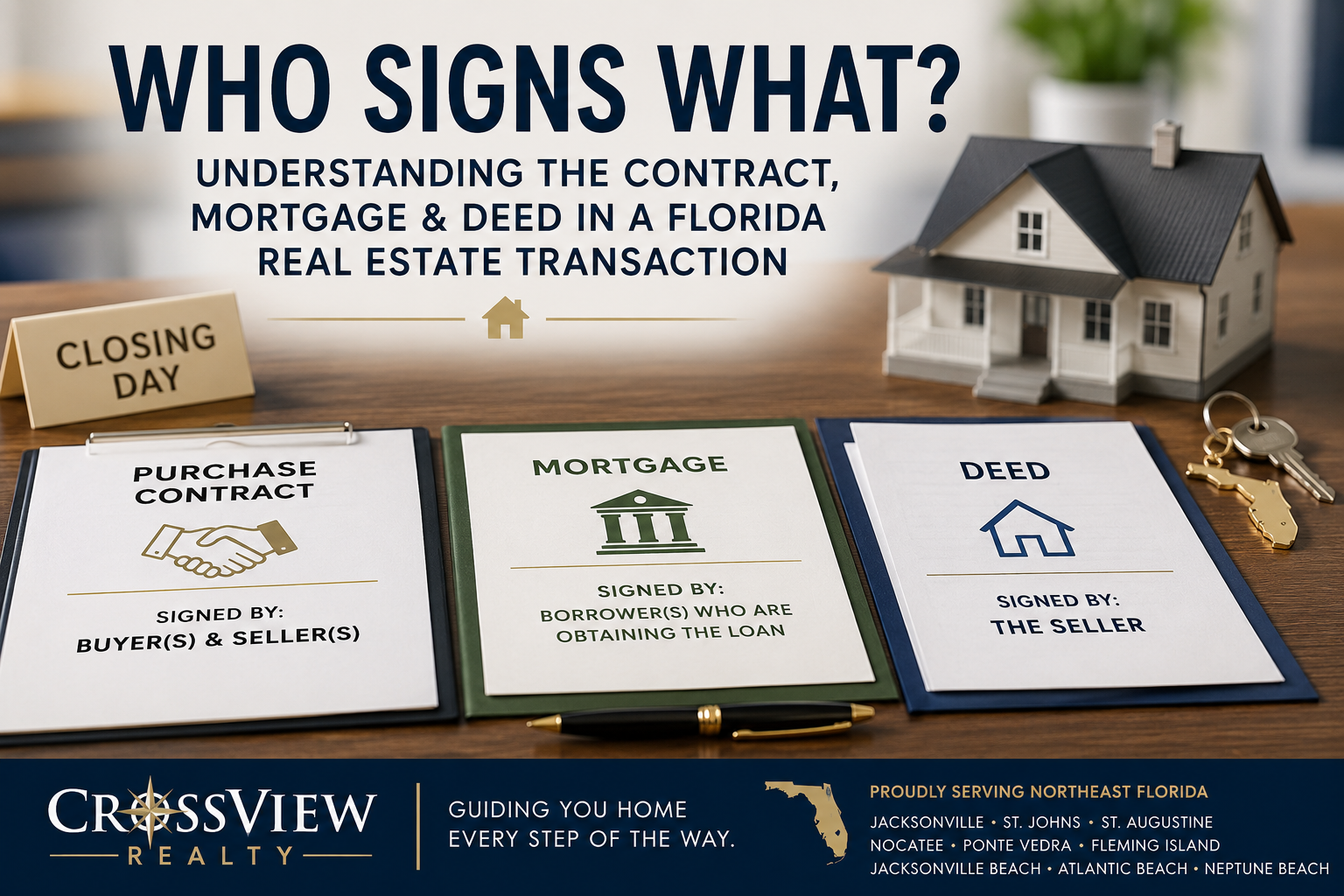
"Who actually has to sign all of the paperwork?"
This is one of the questions I hear most often from buyers and sellers. Many people assume everyone signs every document, but that's not how a Florida real estate transaction works. Different documents serve different purposes, and who signs each one depends on the transaction.
Let's break it down.
Who Signs the Mortgage?
The mortgage is usually the first document people ask me about.
If only one spouse is qualifying for the loan, then only that spouse's income and credit are used by the lender. In that situation, only that spouse signs the loan obligation. If both spouses are needed to qualify because both incomes and credit reports are being used, then both spouses will sign the loan documents required by the lender.
Every lender has its own underwriting guidelines, so the exact documents that require signatures can vary. Your lender and title company will let you know exactly who needs to sign before closing.
Who Signs the Purchase Contract?
The purchase contract is different from the mortgage.
In most cases, everyone who is purchasing the property signs the purchase contract. If a married couple is buying a home together, both spouses typically sign the contract.
There are exceptions. For example, if a property is being purchased solely by one spouse as an investment property, only that spouse may be the purchaser. Even then, depending on the lender, title company, and the way title is being taken, additional signatures may still be required.
This is why I always tell my clients to let me know their marital status early in the process. It helps avoid surprises later.
Who Signs the Deed?
The deed is actually one of the simplest documents at closing.
The seller signs the deed because the deed transfers ownership of the property to the buyer. Buyers generally do not sign the deed because they are receiving ownership rather than giving it away.
Once the deed has been signed, delivered, and recorded in the public records, ownership officially transfers to the buyer.
A Real-Life Example
I once worked with a buyer who told me she was divorced and wanted to purchase a home on her own. As we moved through the transaction, we discovered that although she and her spouse were separated, they were still legally married.
Because she was still legally married, additional signatures were required before the transaction could be completed. That created delays that could have been avoided if we had known the situation from the beginning.
This is one reason I always encourage my clients to be completely upfront about their marital status, even if they are separated or in the middle of a divorce. Being legally married can affect what documents need to be signed and who may need to be involved in the closing process.
In my opinion, if your housing situation allows you to wait, it is often simpler to complete the divorce before purchasing another home. Every situation is different, though, and there are certainly circumstances where buying before the divorce is finalized makes sense. That's why it's important to discuss your specific situation with your real estate agent, lender, title company, and, when appropriate, your attorney.
Why It Matters
The last thing anyone wants is to arrive at the closing table only to discover another person needs to sign documents before the transaction can be completed.
One of my jobs as your REALTOR® is helping identify these issues early so we can work with the lender and title company before closing day. The better prepared everyone is, the smoother your closing will be.
Final Thoughts
Every real estate transaction is unique, and while there are general guidelines about who signs the contract, mortgage, and deed, your specific circumstances may require additional signatures or documents.
That's why I encourage my clients to ask questions throughout the process. I'd much rather explain everything before closing than have you surprised at the closing table.
If you're buying or selling a home in Jacksonville, Mandarin, St. Johns, St. Augustine, Nocatee, Ponte Vedra, Fleming Island, Jacksonville Beach, Atlantic Beach, Neptune Beach, or anywhere in Northeast Florida, I'd be honored to help guide you through every step of the process.
Contact Michael Nobles
Michael Nobles
CrossView Realty
📞 904-465-3536
📧 mike@crossviewrealty.com
🌐 www.michaelnoblesrealtor.com
Frequently Asked Questions
Do both spouses always have to sign the mortgage?
Not necessarily. It depends on who is qualifying for the loan and the lender's requirements.
Do both buyers sign the purchase contract?
Generally, yes. Everyone purchasing the property typically signs the contract.
Do buyers sign the deed?
Generally, no. The seller signs the deed to transfer ownership to the buyer.
Can being legally married affect a home purchase even if we're separated?
Yes. Depending on the circumstances, being legally married may affect which documents require signatures or how title is handled.
Should I tell my REALTOR® if I'm separated but not divorced?
Absolutely. Sharing that information early helps your REALTOR®, lender, and title company prepare for any additional documentation that may be required and can help prevent closing delays.