Is a Manufactured Home Considered Real Property?
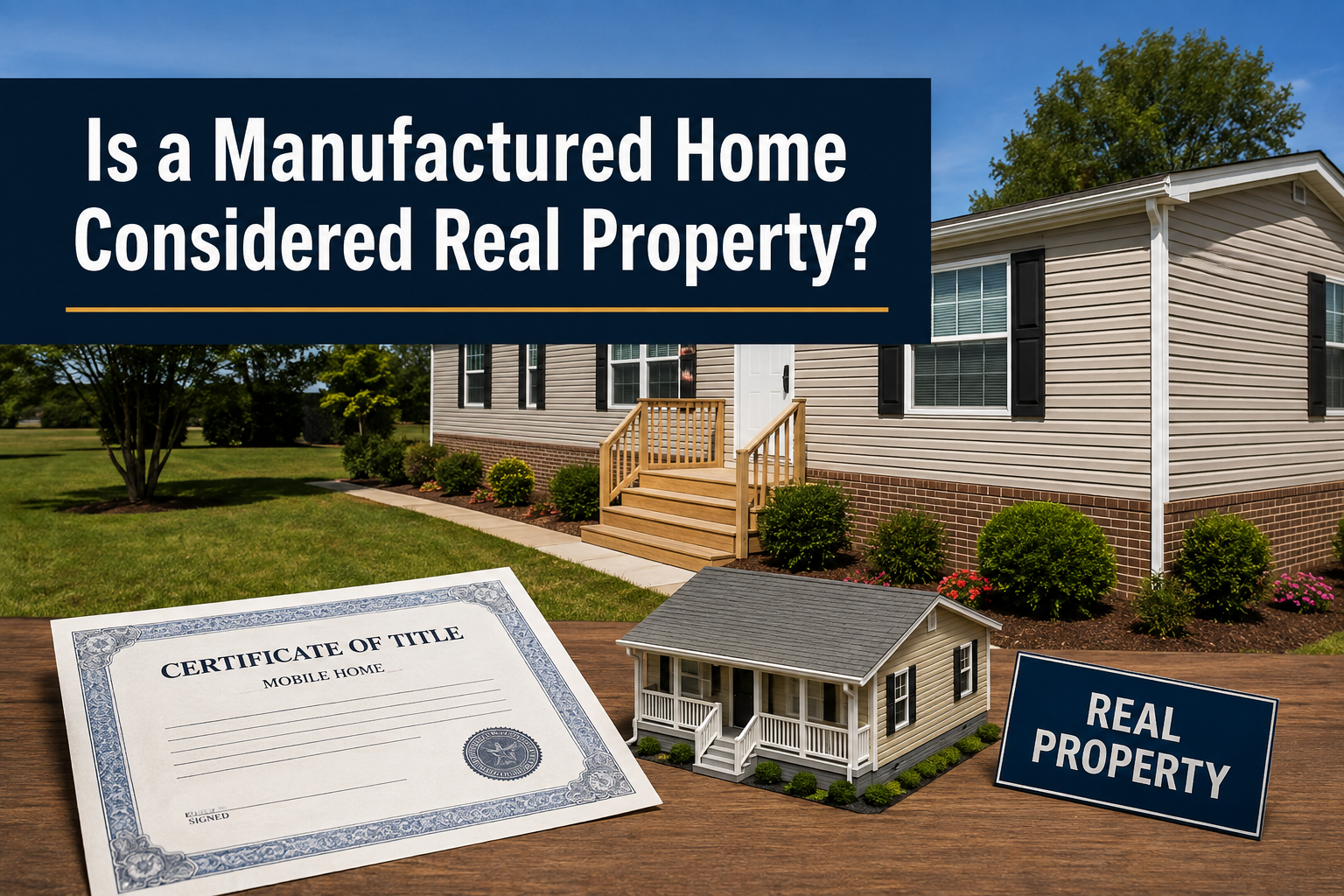
Is a manufactured home or mobile home considered real property in Florida?
The short answer is: not automatically. A manufactured home can begin as separately titled property, similar in some ways to a vehicle. Under the right circumstances, however, it can become part of the real estate on which it is permanently located.
A Manufactured Home Can Have Its Own Title
One of the biggest differences between a manufactured home and a traditional site-built home is the title.
A manufactured or mobile home can have a certificate of title. In fact, depending on how the home is constructed, there may be more than one title associated with it.
This means you can have a situation where the land is real property, but the manufactured home sitting on the land is still separately titled.
That's something buyers and sellers need to understand.
How Does a Manufactured Home Become Real Property in Florida?
For a manufactured home to become part of the real estate, there are specific requirements that have to be met.
Generally, the home needs to be permanently affixed to the property. That means we're no longer talking about a mobile home that is simply capable of being hooked up and moved somewhere else. The home is installed as a permanent residence, properly tied down and connected to the necessary utilities.
Florida also has a legal process for retiring the manufactured home's title when the requirements are met. In a typical situation, the owner of the manufactured home also owns the land underneath it. There are some exceptions involving qualifying leasehold interests, so every property should be looked at individually.
Once the proper requirements are satisfied and the title is retired, the manufactured home can become part of the real property and transfer along with the land.
Why Does the Title Matter?
This is where I have seen situations become more complicated than people expect.
Suppose you own the land, but the manufactured home sitting on it still has a separate title. You may effectively be dealing with two different assets: real estate for the land and a separately titled manufactured home.
That distinction can affect financing, insurance, taxes and eventually your ability to sell the property.
Insurance can sometimes become more complicated when the home and land aren't being treated together as real property. Financing can also be very different depending on whether a lender is financing real estate or a separately titled manufactured home.
That's why I want to know exactly what I'm dealing with before we get too far into a transaction.
What If the Title Was Never Properly Transferred?
This can create an even bigger problem.
Someone may have purchased a property years ago believing everything was taken care of, only to discover later that the title to the manufactured home was never properly transferred.
You could potentially own the land while the title records for the home still show a previous owner.
Now imagine discovering that when you're trying to sell.
The title history may have to be corrected before the manufactured home can be properly transferred or before its title can be retired. Depending on the circumstances, that could involve locating a previous owner, dealing with a lost title, an estate or another title issue.
That's why I wouldn't automatically tell someone that they simply need to find the original purchaser and have that person sign the title. The important thing is getting the title history properly resolved.
What About Property Taxes and Homestead?
This is another area where terminology can get confusing.
Florida has specific rules for how manufactured and mobile homes are classified and taxed. A home that is permanently affixed to land owned by the same owner may be taxed as real property when the applicable requirements are satisfied.
Homestead exemption can also depend on the particular ownership and property circumstances. Because there are situations involving mobile homes that are treated differently under Florida law, I would not assume that simply having or not having a vehicle-style title automatically determines whether someone qualifies for homestead.
The best approach is to verify the particular property with the county property appraiser and make sure the title, land ownership and tax records agree.
Don't Wait Until You're Ready to Sell
This may be the most important part of the discussion.
If you own a manufactured home on your own land, don't wait until you have a buyer and are getting ready to close to find out how the home is titled.
Find out now.
Does the manufactured home still have an active title? Whose name is on it? Do you own the land underneath the home? Was the title ever retired? Do the county records show the home as part of the real property?
Those are much easier questions to deal with before you're under a deadline to close.
My Final Takeaway
Manufactured homes can be a good and affordable housing option, but buyers need to understand exactly what they're purchasing.
When I'm helping someone buy or sell a manufactured home in Jacksonville or Northeast Florida, I want to know whether we're dealing with the land and home together as real property or whether there is still a separately titled manufactured home involved.
A little investigation at the beginning can prevent a much bigger problem at the end.
If you're considering buying or selling a manufactured home in Jacksonville, Mandarin, St. Johns, Fleming Island, St. Augustine, or the surrounding Northeast Florida area, feel free to contact me. I'll help you determine what questions need to be answered before you move forward.
Michael Nobles
CrossView Realty