What AI says it would do if it were the Devil in todays world
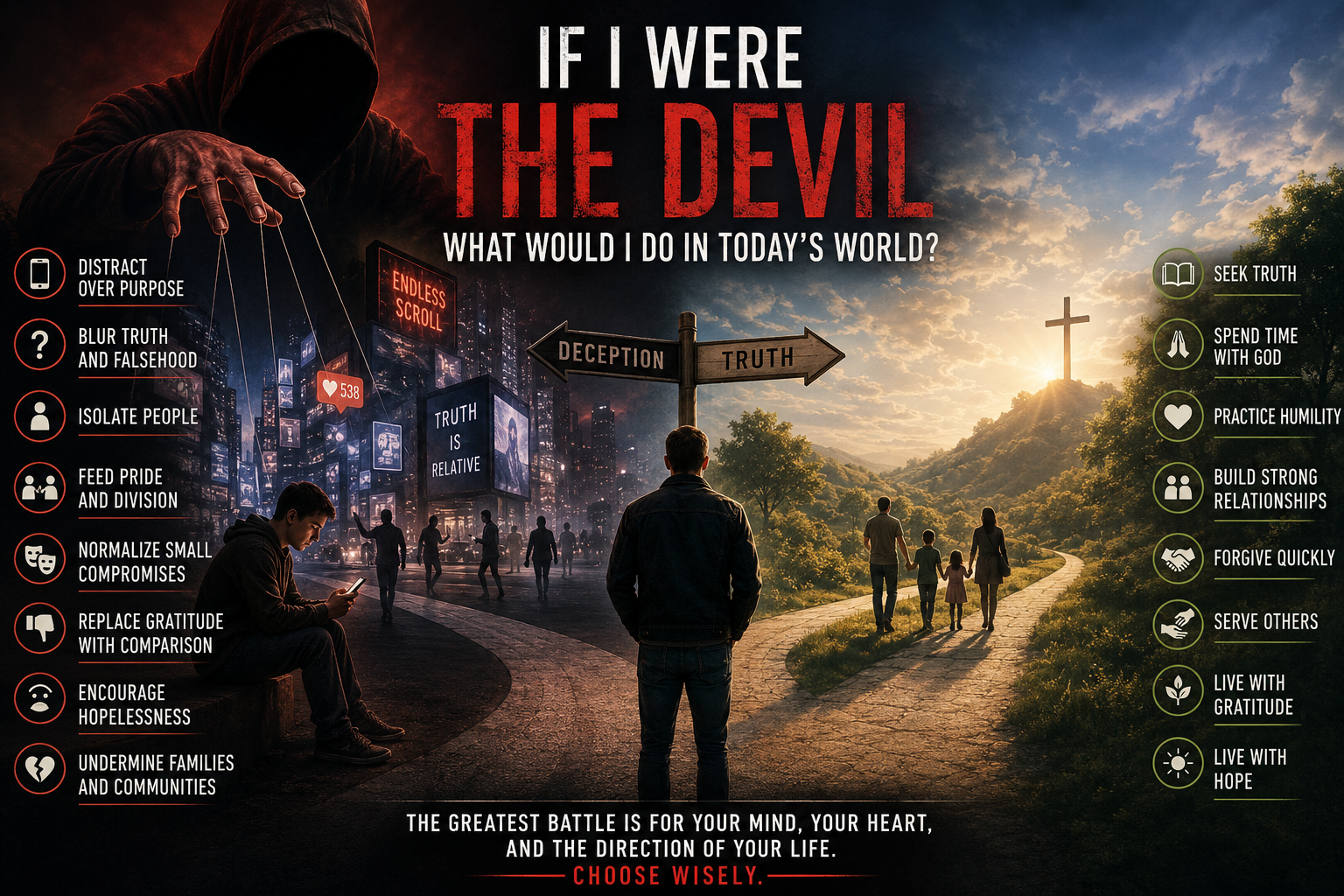
That's an interesting question because it can be answered from different perspectives—religious, philosophical, or psychological. If we're speaking from a Christian worldview, where the devil's goal is to separate people from God and from one another, then the strategy wouldn't necessarily be dramatic. It would likely be subtle.
If I were describing that perspective, I would say the "playbook" might look something like this:
Encourage distraction over purpose. Keep people so busy with entertainment, work, and constant notifications that they never have time to reflect on life's deeper questions.
Blur the line between truth and falsehood. Create so much conflicting information that people begin to believe objective truth doesn't exist, making it easier to justify whatever feels convenient.
Isolate people. Replace genuine relationships with shallow connections. Encourage loneliness, resentment, and the belief that no one truly understands them.
Feed pride and division. Convince people that winning arguments is more important than loving others, and that those who disagree are enemies instead of fellow human beings.
Normalize small compromises. Major failures often begin with seemingly insignificant choices. If people become comfortable excusing "little" acts of dishonesty, selfishness, or bitterness, those habits can grow over time.
Replace gratitude with comparison. Keep people focused on what they lack instead of what they have. Social comparison can fuel envy, anxiety, and dissatisfaction.
Encourage hopelessness. Convince people that change is impossible, that forgiveness isn't available, or that their mistakes define them permanently.
Undermine families and communities. Healthy families, friendships, and faith communities often provide accountability, encouragement, and support. Weakening those bonds can leave people more vulnerable.
From a psychological standpoint, many of these tactics don't require belief in a literal devil to be recognizable. Distraction, polarization, misinformation, addiction to technology, loneliness, and chronic comparison are all real challenges that researchers and mental health professionals discuss because they can negatively affect individuals and society.
From a Christian perspective, many believers would say the antidote is the opposite of those tactics:
Seek truth.
Spend time with God through prayer and Scripture.
Practice humility.
Build strong relationships.
Forgive quickly.
Serve others.
Live with gratitude and hope.
Interestingly, many of these same practices are also associated with better mental health and stronger communities, regardless of one's religious beliefs.
It's a question that has been explored for centuries, and many would argue that the greatest dangers are often not the obvious ones, but the subtle habits and influences that gradually shape the way we think and live.