How to Buy Tax Liens in Florida
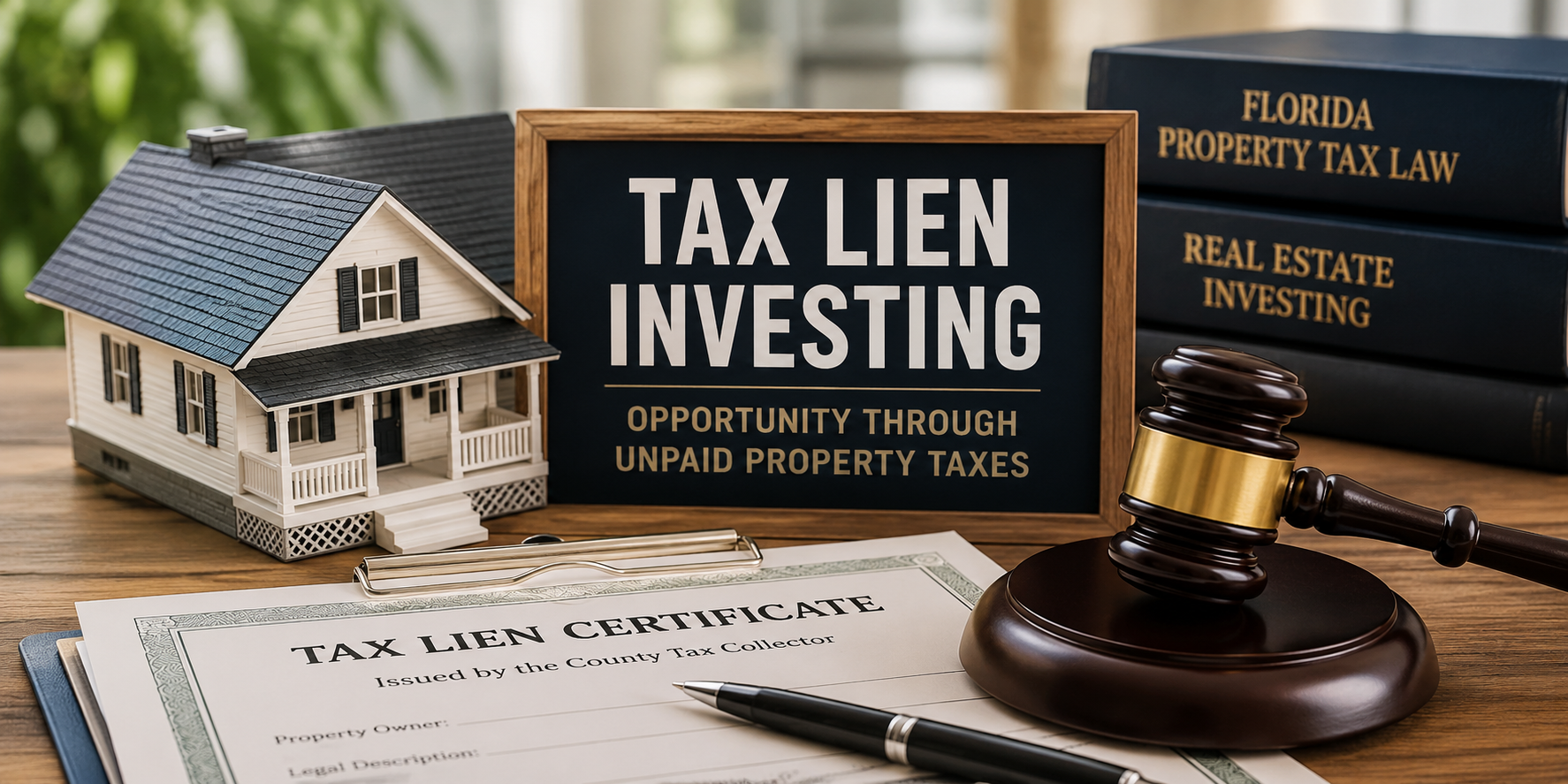
How do tax liens work in Florida, and can you really buy property through unpaid taxes?
In Florida, investors can purchase tax certificates on properties with unpaid property taxes. If those taxes remain unpaid long enough, the process can eventually lead to a tax deed sale where investors may have an opportunity to acquire real estate below market value.
As a real estate agent with CrossView Realty serving Jacksonville and the surrounding Northeast Florida market, I get asked about tax liens and tax deed investing fairly often. A lot of people hear stories about someone buying a house for pennies on the dollar, but the reality is much more detailed than most people realize.
What Is a Tax Lien in Florida?
When a property owner fails to pay their property taxes in Florida, the county still needs to collect that money to fund services like roads, emergency services, and public infrastructure.
To recover those unpaid taxes, Florida counties sell something called a tax certificate.
A tax certificate is not ownership of the property itself. Instead, it is essentially an investment tied to the unpaid tax debt on the property.
The investor who purchases the certificate pays the delinquent taxes to the county. In return, the investor earns interest if the property owner eventually pays the taxes back.
That’s one of the biggest misconceptions I hear in the Northeast Florida market. Buying a tax lien does not automatically mean you own the house.
How Florida Tax Lien Investing Works
Florida tax certificates are sold through an auction process, usually online through the county tax collector’s office.
Here’s the basic process:
A homeowner fails to pay property taxes.
The county places a tax certificate up for auction.
Investors bid on the interest rate they are willing to accept.
The lowest interest bidder wins the certificate.
The property owner eventually repays the taxes plus interest to the certificate holder.
Florida is considered a “bid down interest” state. That means investors compete by lowering the interest rate they are willing to earn.
The maximum rate can start as high as 18%, but competitive bidding often drives rates much lower.
What Happens if the Owner Never Pays?
This is where things become more interesting for investors.
If the taxes remain unpaid for a certain period of time, the tax certificate holder can apply for a tax deed sale.
In Florida, that generally happens after two years from April 1 of the tax year when the certificate was issued.
At that point, the county may auction the actual property through a tax deed sale.
This is the stage where some investors hope to acquire real estate below market value in areas like Jacksonville Beach, St. Augustine, or Fleming Island.
However, tax deed investing comes with risks that many beginners underestimate.
The Risks of Buying Tax Liens and Tax Deeds
I always caution investors not to treat tax lien investing like a guaranteed shortcut to wealth.
There are real risks involved.
Some of the biggest issues include:
Unknown property condition
Existing code violations
Environmental problems
Title complications
HOA liens
Occupied properties
Demolition orders
Limited property access before bidding
In many cases, investors cannot fully inspect the interior of the property before the auction.
I’ve seen situations where a property looked promising online but ended up needing massive repairs once the investor gained access.
That’s why due diligence is absolutely critical.
Research Before You Bid
Before purchasing a Florida tax lien or bidding at a tax deed sale, investors should research:
Property location
Estimated market value
Existing mortgages or liens
Property condition
Flood zones
Zoning restrictions
HOA obligations
Code enforcement issues
This is especially important in coastal Florida communities like Atlantic Beach or Ponte Vedra Beach where flood insurance and property condition can dramatically affect costs.
I also tell investors to physically drive by properties whenever possible. Satellite photos and online records never tell the full story.
Tax Liens vs. Tax Deeds in Florida
A lot of people use these terms interchangeably, but they are actually different.
Tax Lien (Tax Certificate)
You are purchasing the unpaid tax debt.
You earn interest if the owner redeems the property.
You do not immediately own the property.
Tax Deed
The county auctions the actual property.
Ownership may transfer through the auction process.
Additional legal and title work may still be needed afterward.
Understanding the difference is important before investing money.
Can You Really Buy a Home Cheap at a Tax Deed Sale?
Sometimes yes — but it’s not nearly as easy as social media videos make it sound.
Many experienced investors monitor tax deed sales daily, and competitive bidding can drive prices up quickly.
In stronger Northeast Florida markets like Nocatee or parts of Mandarin, desirable properties often receive heavy investor attention.
That said, there can still be opportunities for knowledgeable buyers who do proper research and stay patient.
My Advice for First-Time Tax Lien Investors
If you are brand new to tax lien investing in Florida, my recommendation is to start cautiously.
Don’t assume every property is a hidden gem. Some are excellent opportunities, while others can become expensive problems very quickly.
I usually recommend:
Researching smaller certificates first
Learning county auction systems
Studying property records
Understanding title issues
Talking with a real estate attorney when needed
Working with local professionals who understand the area
Real estate investing is rarely about getting rich overnight. The investors I see succeed are usually the ones who approach it methodically and treat it like a business.
Final Thoughts on Florida Tax Liens
Florida tax lien investing can be an interesting opportunity for investors looking to diversify into real estate-related assets. In some cases, tax deed sales can also create opportunities to acquire properties below retail market value.
But like anything in real estate, education and due diligence matter.
The more research you do upfront, the fewer surprises you are likely to encounter later.
As someone working throughout the Northeast Florida real estate market, I enjoy helping investors understand local property values, neighborhood trends, and the realities behind investment opportunities.
Let’s Talk About Investment Opportunities in Northeast Florida
If you’re interested in learning more about Florida tax liens, tax deed investing, or other real estate investment opportunities in the Jacksonville area, give me a call directly.
I’m Michael Nobles with CrossView Realty, and I help buyers and investors throughout Jacksonville, St. Johns, Neptune Beach, and surrounding areas better understand the Northeast Florida real estate market.
Phone: 904-465-3536
Email: mike@crossviewrealty.com
Website: michaelnoblesrealtor.com
Frequently Asked Questions
Q: How do tax liens work in Florida?
A: In Florida, counties sell tax certificates when homeowners fail to pay property taxes. Investors purchase those certificates and earn interest if the homeowner repays the taxes.
Q: Can I buy a house through a tax deed sale in Jacksonville, Florida?
A: Yes, it is possible. If delinquent taxes remain unpaid long enough, the county may auction the actual property through a tax deed sale. However, buyers should carefully research title issues and property condition before bidding.
Q: Is tax lien investing risky?
A: It can be. Some properties have hidden problems like code violations, HOA issues, or major repair needs. That’s why I always recommend thorough due diligence before investing.
Q: What’s the difference between a tax lien and a tax deed?
A: A tax lien, also called a tax certificate in Florida, represents unpaid property taxes. A tax deed sale is when the county auctions the actual property itself after taxes remain unpaid for an extended period.
Q: Are Florida tax deed sales good for beginner investors?
A: They can be, but beginners should move carefully. I usually recommend learning the process first, researching properties thoroughly, and understanding the legal side of the transaction before investing significant money.